Agents that learn, remember, and run on schedule

Last month we shipped agent schedules and file management in Drive. This month, we're adding the piece that ties them together: agent memory.
On its own, memory is a meaningful upgrade. But combined with what we launched in January, it unlocks something bigger: agents that can run on a regular cadence, remember what they did last time, and get better with every run. Let's get into it.
Agent memory
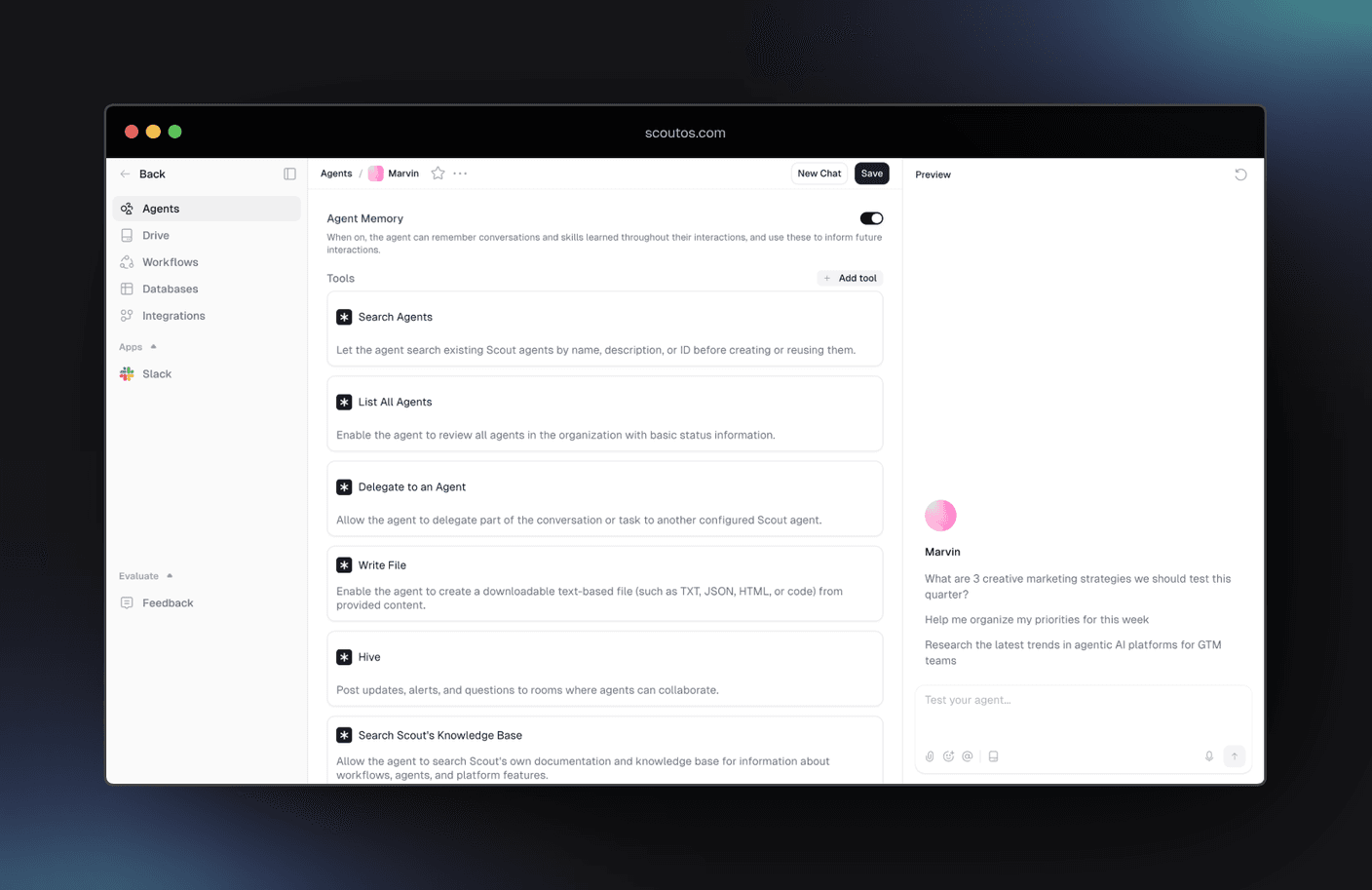
Your agents can now remember things across conversations and across runs.
Before this, every session started from scratch. No context from previous interactions, no awareness of what the agent had already done. That's fine for one-off tasks, but it's a real limitation for anything recurring. An agent prepping you for a Monday standup shouldn't need to relearn your accounts every week. An agent cleaning your CRM shouldn't re-flag records it already reviewed.
With agent memory, agents carry context forward. They know what they did last time, what changed, and what to do differently. Over time, they get more useful because they're building up context rather than resetting it.
You can also continue shaping an agent just by talking to it. Tell it what you liked, what you want adjusted, and it holds onto that going forward.
Better together: memory, schedules, and skills
The real unlock here is how these recent updates layer on top of each other.
Agent schedules (launched in January) let you set an agent to run automatically on a daily, weekly, or monthly cadence. File management in Drive (also January) gives agents a place to create, save, and reference assets across runs. Now add memory, and you have agents that not only run on schedule and produce outputs, but actually learn from each run.
This is also what makes agent skills possible. Skills are reusable capabilities you build into an agent using files in Drive, similar to how coding agents like Claude Code use skills. With memory and files working together, a single agent can handle a much larger variety of tasks reliably and get sharper over time without you having to rebuild it from scratch.
The practical picture: an agent that checks your calendar every morning, preps notes for your calls, remembers what came up in past meetings, and adjusts based on feedback you've given it along the way. Set it up once, and it compounds.
Under the hood
We also did significant platform work this month, including improvements to how agent tables handle embedding models and early groundwork on a more robust API key and permissions system. These will show up as more reliability and flexibility as they roll out over the coming months.
Ready to get started?
Book a demo or chat live with a Scout engineer.