Drive, recall, and smarter agent reliability

A lot of the work we've been doing at Scout lately is foundational infrastructure—the kind of under-the-hood work that might not look flashy at first, but unlocks powerful new capabilities. This update is all about making your agents smarter, more reliable, and easier to organize.
🗂️ Introducing Drive: Your Central Hub for Agent Knowledge
The biggest addition to Scout is Drive—a unified workspace where all the knowledge your agents can access lives in one organized place.
What's in Drive:
- Tables - Structured data your agents can reference
- Workflows - The automations powering your agents
- Crawls - Streamlined web scraping (appears as tables but with a cleaner setup process)
Think of Drive as mission control for your agent's knowledge base. Instead of scattered data sources, everything is organized, connected, and accessible from one place.
Drive is now available for everyone in Scout. For current users, you’ll still see Databases and Workflows in the side navigation in your Scout workspace for the next couple of months. We want to make the transition as smooth as possible.
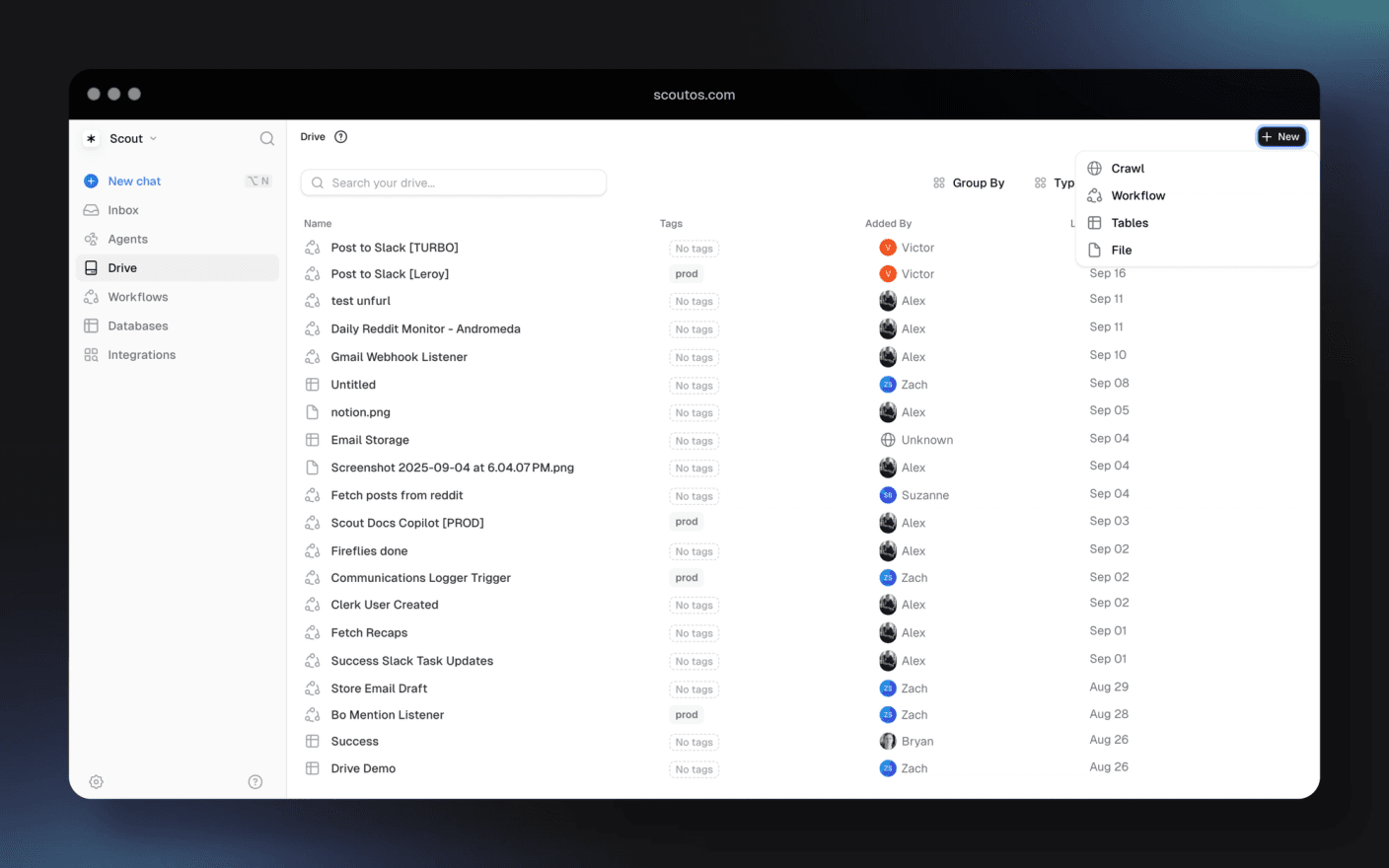
Coming Soon: File support is in fast-follow development, so you'll soon be able to upload and organize documents directly in Drive for your agents to reference.
⚡ Dynamic Mode: Never Let Downtime Slow You Down
If you've used AI agents long enough, you've experienced the frustration: OpenAI goes down, your workflow grinds to a halt.
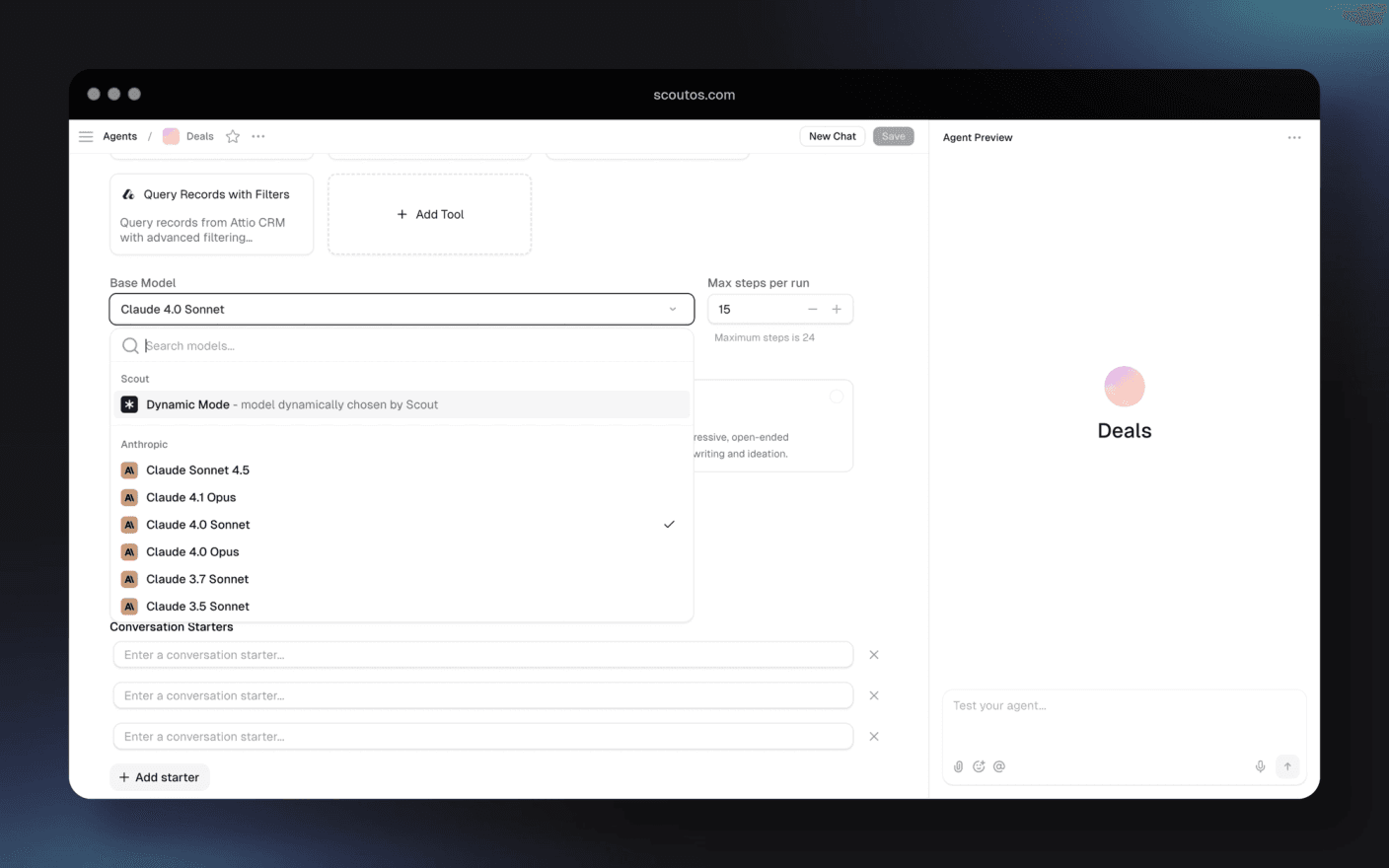
Dynamic Mode solves this by automatically routing requests to the best-available model based on your task—and we have access to all the major models (GPT, Claude, Gemini).
The benefit? Seamless failover. If OpenAI has an outage, Scout automatically switches to Claude or Gemini without you lifting a finger. This is one of the key advantages of using a third-party platform like Scout instead of going direct to ChatGPT.
Plus, you’ll automatically maximize speed and token usage by leveraging faster, cheaper models for simpler tasks and only leaning on the heavy-duty models for the hardest work.
🧠 Recall: Giving Agents Memory
Here's where things get interesting. We're working on Recall—a capability that will be available to every agent in Scout.
How it works: When you expose a file to an agent, Scout will automatically index it. Your agent can then recall that information in future conversations, creating a form of persistent memory without overwhelming the context window.
This is just the first piece of our broader vision for agentic memory. We're building the infrastructure that lets agents learn from past interactions while staying focused and performant—it's harder than it sounds, but we believe this is how we create the next leap forward in AI utility.
🔧 Other Improvements
- Compaction: Agents can now dynamically compress their context, keeping conversations efficient without losing important information
- JSON Mode: Perfect for developers—agents can now respond exclusively in JSON format for programmatic integrations (great for hooking into APIs like HubSpot)
What's Next?
Much of our recent work has been infrastructure that doesn't show immediate UI changes but enables powerful features down the road. Files in Drive, enhanced Recall capabilities, and more turnkey ways to expose your data to agents are all on the horizon.
As always, we're building Scout to be the platform where your agents don't just respond—they remember, adapt, and stay reliable when it matters most.
Ready to get started?
Book a demo or chat live with a Scout engineer.